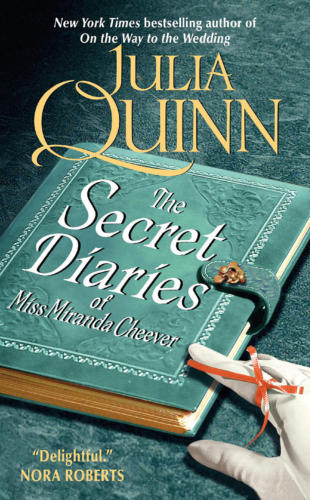




The Secret Diaries of Miss Miranda Cheever
Book 1 in the
Bevelstoke Series
At the age of ten, Miranda Cheever showed no signs of Great Beauty. And even at ten, Miranda learned to accept the expectations society held for her—until the afternoon when Nigel Bevelstoke, the handsome and dashing Viscount Turner, solemnly kissed her hand and promised her that one day she would grow into herself, that one day she would be as beautiful as she already was smart. And even at ten, Miranda knew she would love him forever.
But the years that followed were as cruel to Turner as they were kind to Miranda. She is as intriguing as the viscount boldly predicted on that memorable day—while he is a lonely, bitter man, crushed by a devastating loss. But Miranda has never forgotten the truth she set down on paper all those years earlier—and she will not allow the love that is her destiny to slip lightly through her fingers…
The first book in the Bevelstoke series: witty, irresistibly romantic and by the bestselling author of the global phenomenon Bridgerton.
 Start Reading Now
Explore Inside this Story

-
Quinn-tessential Quote
Today I fell in love.
-
Inside the Story:
JQ’s Author Notes- Version 1.0 of The Secret Diaries of Miss Miranda Cheever was written in 1994, just after Splendid (my first novel) was bought for publication. For various reasons, it never quite made it onto the publishing schedule, but I always thought it was the best of my early books, so I kept waiting for the right moment to finally publish it. With the Bridgerton series complete, 2007 seemed the perfect time. I’d planned to spend 2-3 weeks cleaning it up, but I quickly realized I’d need 2-3 months. I found the process enormously exciting and enriching—it was the first time in years I was free to just write, without having to worry about what was going to happen next.
- I resisted the temptation to drop a Bridgerton into the story, but I did keep the mention of the Duke of Ashbourne, who was the hero of Splendid. I’d included him back in the first version and saw no reason to change him.
- Most of the book is a blend of what was written in 1994 and 2006, but some large chunks and scenes come from just one version. The prologue is almost entirely from 1994, while Chapter One is completely new. The scene in the bookshop is also almost entirely from the early version.
- Miranda lives in the Lake District, in the village of Ambleside, which in the 19th century was in the county of Cumberland. In 1974, however, the UK enacted the Local Government Act 1972, which reorganized many administrative counties. Cumberland was absorbed into Cumbria (along with Westmorland and parts of Lancashire and the West Riding of Yorkshire) and was wiped off the administrative map. The name still exists as a geographical and cultural term, however. But it’s a warning to historical romance writers everywhere—make sure you look at maps from the time period in which you are writing! It would have been terrible if I’d had Miranda living in Cumbria.
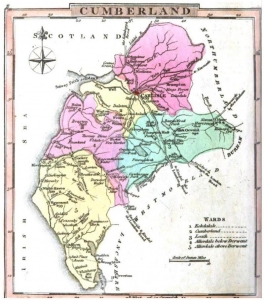
1824 map of Cumberland. Public domain as per Wikimedia Commons

Bonus Features


Enjoy an Excerpt
from
The Secret Diaries of Miss Miranda Cheever
Prologue
At the age of ten, Miss Miranda Cheever showed no signs of Great Beauty. Her hair was brown –lamentably– as were her eyes; and her legs, which were uncommonly long, refused to learn anything which could be remotely called grace. Her mother often remarked that she positively loped around the house.
Unfortunately for Miranda, the society into which she was born placed great stock on female appearance. And although she was only ten, she knew that in this regard she was considered inferior to most of the other little girls who lived nearby. Children have a way of finding these things out, usually from other children.
Just such an unpleasant incident occurred at the eleventh birthday party of Lady Olivia and the Honourable Winston Bevelstoke, twin children of the Earl and Countess of Rudland. Miranda’s home was quite close to Haverbreaks, the Rudlands’ ancestral home near Ambleside, in the Lake District of Cumberland, and she had always shared lessons with Olivia and Winston when they were in residence. They had become quite an inseparable threesome and rarely bothered to play with the other children in the area, most of whom lived nearly an hour’s ride away.
But a dozen or so times a year, and especially on birthdays, all of the children of the local nobility and gentry gathered together. It was for this reason that Lady Rudland let out a most unladylike groan; eighteen urchins were gleefully tramping mud through her parlor after the twins’ party in the garden was disrupted by rain.
“You’ve mud on your cheek, Livvy,” Miranda said, reaching out to wipe it away.
Olivia let out a dramatically weary sigh. “I’d best go to the washroom, then. I shouldn’t want Mama to see me thus. She quite abhors dirt, and I quite abhor listening to her tell me how much she abhors it.”
“I don’t see how she will to have time to object to a little mud on your face when she’s got it all over the carpet.” Miranda glanced over at William Evans, who let out a war cry and cannonballed onto the sofa. She pursed her lips; otherwise, she’d smile. “And the furniture.”
“All the same, I had best go do something about it.”
She slipped out of the room, leaving Miranda near the doorway. Miranda watched the commotion for a minute or so, quite content to be in her usual spot as an observer, until, out of the corner of her eye, she saw someone approaching.
“What did you bring Olivia for her birthday, Miranda?”
Miranda turned to see Fiona Bennet standing before her, prettily dressed in a white frock with a pink sash. “A book,” she replied. “Olivia likes to read. What did you bring?”
Fiona held up a gaily painted box tied with a silver cord. “A collection of ribbons. Silk and satin and even velvet. Do you want to see?”
“Oh, but I wouldn’t want to ruin the wrapping.”
Fiona shrugged. “All you need to do is untie the cord carefully. I do it every Christmas.” She slipped off the cord and lifted the lid.
Miranda caught her breath. At least two dozen ribbons lay on the black velvet of the box, each exquisitely tied into a bow. “They’re beautiful, Fiona. May I see one?”
Fiona narrowed her eyes.
“I haven’t any mud on my hands. See?” Miranda held her hands up for inspection.
“Oh, very well.”
Miranda reached down and picked up a violet ribbon. The satin felt sinfully sleek and soft in her hands. She placed the bow coquettishly against her hair. “What do you think?”
Fiona rolled her eyes. “Not violet, Miranda. Everyone knows they are for blond hair. The color practically disappears against brown. You certainly can’t wear one.”
Miranda handed the ribbon back to her. “What color suits brown hair? Green? My mama has brown hair, and I’ve seen her wear green ribbons.”
“Green would be acceptable, I suppose. But it’s better in blond hair. Everything’s better in blond hair.”
Miranda felt a spark of indignation rising within her. “Well, I don’t know what you’re going to do then, Fiona, because your hair is as brown as mine.”
Fiona drew back in a huff. “It is not!”
“Is too!”
“Is not!”
Miranda leaned forward, her eyes narrowing menacingly. “You had better take a look in the mirror when you go home, Fiona, because your hair is not blond.”
Fiona put the violet ribbon back in its case and snapped the lid shut. “Well, it used to be blond, whereas yours never was. And besides that, my hair is light brown, which everyone knows is better than dark brown. Like yours.”
“There’s nothing wrong with dark brown hair!” Miranda protested. But she already knew that most of England didn’t agree with her.
“And,” Fiona added viciously, “you’ve got big lips!”
Miranda’s hand flew to her mouth. She knew that she was not beautiful; she knew she wasn’t even considered pretty. But she’d never noticed anything wrong with her lips before. She looked up at the smirking girl. “You have freckles!” she burst out.
Fiona drew back as if slapped. “Freckles fade. Mine shall be gone before I turn eighteen. My mother puts lemon juice on them every night.” She sniffed disdainfully. “But there’s no remedy for you, Miranda. You’re ugly.”
“She is not!”
Both girls turned to see Olivia, who had returned from the washroom.
“Oh, Olivia,” Fiona said. “I know you are friends with Miranda because she lives so close by and shares your lessons, but you must admit she isn’t very pretty. My mama says she’ll never get a husband.”
Olivia’s blue eyes sparkled dangerously. The Earl of Rudland’s only daughter had always been loyal to a fault, and Miranda was her best friend. “Miranda will get a better husband than you, Fiona Bennet! Her father’s a baronet whereas yours is a mere mister.”
“Being a baronet’s daughter makes little difference unless one has looks or money,” Fiona recited, repeating words she had obviously heard at home. “And Miranda has neither.”
“Be quiet, you silly old cow!” Olivia exclaimed, stomping her foot on the ground. “This is my birthday party, and if you can’t be nice, you may leave!”
Fiona gulped. She knew better than to alienate Olivia, whose parents held the highest rank in the area. “I’m sorry, Olivia,” she mumbled.
“Don’t apologize to me. Apologize to Miranda.”
“I’m sorry, Miranda.”
Miranda stayed silent until Olivia finally kicked her. “I accept your apology,” she said grudgingly.
Fiona nodded and ran off.
“I can’t believe you called her a silly old cow,” Miranda said.
“You must learn to stand up for yourself, Miranda.”
“I was standing up for myself just fine before you came along, Livvy. I just wasn’t doing it so loudly.”
Olivia sighed. “Mama says I haven’t an ounce of restraint or common sense.”
“You don’t,” Miranda agreed.
“Miranda!”
“It’s true, you don’t. But I love you anyway.”
“And I love you, too, Miranda. And don’t worry about silly old Fiona. You can marry Winston when you grow up and then we’ll be sisters truly.”
Miranda glanced across the room and eyed Winston dubiously. He was yanking on a little girl’s hair. “I don’t know,” she said hesitantly. “I’m not sure I would wish to marry Winston.”
“Nonsense. It would be perfect. Besides, look, he just spilled punch on Fiona’s dress.”
Miranda grinned.
“Come with me,” Olivia said, taking her hand. “I want to open my gifts. I promise I’ll squeal the loudest when I get to yours.”
The two girls walked back into the room, and Olivia and Winston opened their gifts. Mercifully (in Lady Rudland’s opinion), they finished at four o’clock on the button, which was the time that the children were meant to go home. Not a single child was picked up by servants; an invitation to Haverbreaks was considered quite an honor, and none of the parents wanted to miss the opportunity to hobnob with the earl and countess. None of the parents besides Miranda’s, that was. At five o’clock she was still in the sitting room, assessing the birthday booty with Olivia.
“I can’t imagine what has happened to your parents, Miranda,” Lady Rudland said.
“Oh, I can,” Miranda replied cheerfully. “Mama’s gone to Scotland to visit her mama, and I’m sure Papa has forgotten about me. He often does, you know, when he’s working on a manuscript. He translates from the Greek.”
“I know.” Lady Rudland smiled.
“Ancient Greek.”
“I know,” Lady Rudland said on a sigh. This was not the first time Sir Rupert Cheever had misplaced his daughter. “Well, you shall have to get home somehow.”
“I’ll go with her,” Olivia suggested.
“You and Winston need to put away your new toys and write thank you notes. If you don’t do it tonight, you shan’t remember who gave you what.”
“But you can’t send Miranda home with a servant. She’ll have no one to talk to.”
“I can talk to the servant,” Miranda said. “I always talk to the ones at home.”
“Not ours,” Olivia whispered. “They’re starched and silent and they always look at me disapprovingly.”
“Most of the time you deserve to be looked at disapprovingly,” Lady Rudland interjected, giving her daughter a loving pat on the head. “I have a treat for you, Miranda. Why don’t we have Nigel bring you home?”
“Nigel!” Olivia squealed. “Miranda, you lucky duck.”
Miranda raised her brows. She had never met Olivia’s older brother. “All right,” she said slowly. “I should like to finally meet him. You talk about him so often, Olivia.”
Lady Rudland summoned a maid to fetch him. “You’ve never met him, Miranda? How odd. Well, I suppose he’s usually only home at Christmas, and you always go to Scotland for the holiday. I had to threaten to cut him off to get him home for the twins’ birthday. As it was, he wouldn’t attend the party for fear that one of the mamas would try to marry him off to a ten-year-old.”
“Nigel is nineteen, and he is very eligible,” Olivia said matter-of-factly. “He’s a viscount. And he’s very handsome. He looks just like me.”
“Olivia!” Lady Rudland said reprovingly.
“Well, he does, Mama. I should be very handsome if I were a boy.”
“You’re quite pretty as a girl, Livvy,” Miranda said loyally, eyeing her friend’s blond locks with just a little envy.
“So are you. Here, pick one of Fiona-cow’s ribbons. I don’t need them all, anyway.”
Miranda smiled at her lie. Olivia was such a good friend. She looked down at the ribbons and perversely chose the violet satin. “Thank you, Livvy. I shall wear it to lessons on Monday.”
“You called, Mother?”
At the sound of the deep voice, Miranda turned her face to the doorway and almost gasped. There stood quite the most splendid creature she had ever beheld. Olivia had said that Nigel was nineteen, but Miranda immediately recognized him as the man he already was. His shoulders were marvelously broad, and the rest of him was lean and firm. His hair was darker than Olivia’s but still streaked with gold, attesting to time spent out in the sun. But the best part about him, Miranda immediately decided, was his eyes, which were bright, bright blue, just like Olivia’s. They twinkled just as mischievously, too.
Miranda smiled. Her mother always said that one could tell a person by his eyes, and Olivia’s brother had very good eyes.
“Nigel, would you please be so kind as to escort Miranda home?” Lady Rudland asked. “Her father seems to have been detained.”
Miranda wondered why he winced when she said his name.
“Certainly, Mother. Olivia, did you have a good party?”
“Smashing.”
“Where is Winston?”
Olivia shrugged. “He’s off playing with the sabre Billy Evans gave him.”
“Not a real one, I hope.”
“God help us if it is,” Lady Rudland put in. “All right, Miranda, let’s get you home. I believe your cloak is in the next room.” She disappeared through the doorway and emerged a few seconds later with Miranda’s serviceable brown coat.
“Shall we be off, Miranda?” The god-like creature held out his hand to her.
Miranda shrugged on her coat and placed her hand in his. Heaven!
“I will see you on Monday!” Olivia called out. “And don’t worry about what Fiona said. She’s just a silly old cow.”
“Olivia!”
“Well, she is, Mama. I don’t want to have her back.”
Miranda smiled as she let Olivia’s brother lead her down the hall, Olivia’s and Lady Rudland’s voices slowly fading away. “Thank you very much for taking me home, Nigel,” she said softly.
He winced again.
“I’m– I’m sorry,” she said quickly. “I ought to be calling you ‘my lord,’ oughtn’t I? It’s just that Olivia and Winston always refer to you by your given name and I–” She cast miserable eyes toward the floor. Only two minutes in his splendid company and already she’d blundered.
He stopped and crouched down so that she could see his face. “Don’t worry about the ‘my lord,’ Miranda. I’ll tell you a secret.”
Miranda’s eyes widened, and she forgot to breathe.
“I despise my given name.”
“That’s not much of a secret, Nig– I mean, my lord, I mean, whatever you wish to be called. You wince every time your mother says it.”
He smiled down at her. Something had tugged at his heart when he saw this little girl with the too-serious expression playing with his indomitable sister. She was a funny-looking little creature, but there was something quite lovable about her big, soulful, brown eyes.
“What are you called?” Miranda asked.
He smiled at her direct manner. “Turner.”
For a moment he thought she might not answer. She just stood there, utterly still save for the blinking of her eyes. And then, as if finally reaching a conclusion, she said, “That’s a nice name. A bit odd, but I like it.”
“Much better than Nigel, don’t you think?”
Miranda nodded. “Did you choose it? I’ve often thought that people ought to choose their own names. I should think that most people would choose something different from what they have.”
“And what would you choose?”
“I’m not certain, but not Miranda. Something plainer, I think. People expect something different from a Miranda and are almost always disappointed when they meet me.”
“Nonsense,” Turner said briskly. “You are a perfect Miranda.”
She beamed. “Thank you, Turner. May I call you that?”
“Of course. And I didn’t choose it, I’m afraid. It’s my title. Viscount Turner. I’ve been using it in place of Nigel since I went to Eton.”
“Oh. It suits you, I think.”
“Thank you,” he said gravely, completely entranced by this serious child. “Now, give me your hand again, and we shall be on our way.”
He had held out his left hand to her. Miranda quickly moved the ribbon from her right hand to her left.
“What’s that?”
“This? Oh, a ribbon. Fiona Bennet gave two dozen of them to Olivia, and Olivia said I might keep one.”
Turner’s eyes narrowed ever so slightly as he remembered Olivia’s parting words. Don’t worry about what Fiona said. He plucked the ribbon out of her hand. “Ribbons belong in hair, I think.”
“Oh, but it doesn’t match my dress,” Miranda said in feeble protest. He’d already fastened it atop her head. “How does it look?” she whispered.
“Smashing.”
“Really?” Her eyes widened doubtfully.
“Really. I’ve always thought that violet ribbons look especially nice with brown hair.”
Miranda fell in love on the spot. So intense was the feeling that she quite forgot to thank him for the compliment.
“Shall we be off?” he said.
She nodded, not trusting her voice.
They made their way out of the house and to the stables. “I thought we might ride,” Turner said. “It’s far too nice a day for a carriage.”
Miranda nodded again. It was uncommonly warm for March.
“You can take Olivia’s pony. I’m sure she won’t mind.”
“Livvy hasn’t got a pony,” Miranda said, finally finding her voice. “She has a mare now. I’ve one at home, too. We’re not babies, you know.”
Turner suppressed a smile. “No, I can see that you are not. How silly of me. I wasn’t thinking.”
A few minutes later their horses were saddled, and they set off on the fifteen minute ride to the Cheever home. Miranda stayed silent for the first minute or so, too perfectly happy to spoil the moment with words.
“Did you have a good time at the party?” Turner finally asked.
“Oh, yes. Most of it was just lovely.”
“Most of it?”
He saw her wince. Obviously, she hadn’t meant to say so much. “Well,” she said slowly, catching her lip between her teeth and then letting it go before continuing, “one of the girls said some unkind words to me.”
“Oh?” He knew better than to be overly inquisitive.
And obviously, he was right, because when she spoke, she rather reminded him of his sister, staring up at him with frank eyes as her words spilled firmly from her mouth. “It was Fiona Bennet,” she said, with great distaste, “and Olivia called her a silly old cow, and I must say I’m not sorry that she did.”
Turner kept his expression appropriately grave. “I’m not sorry that she did, either, if Fiona said unkind things to you.”
“I know I’m not pretty,” Miranda burst out. “But it’s dreadfully impolite to say so, not to mention downright mean.”
Turner looked at her for a long moment, not exactly certain how to comfort the little girl. She wasn’t beautiful, that was true, and if he tried to tell her that she was she wouldn’t believe him. But she wasn’t ugly. She was just… rather awkward.
He was saved, however, from having to say anything by Miranda’s next comment.
“It’s this brown hair, I think.”
He raised his brows.
“It’s not at all fashionable,” Miranda explained. “And neither are brown eyes. And I’m too skinny by half, and my face is too long, and I’m far too pale.”
“Well, that’s all true,” Turner said.
Miranda turned to face him, her eyes looming large and sad in her face.
“You certainly do have brown hair and eyes. There is no use arguing that point.” He tilted his head and pretended to give her a complete inspection. “You are rather thin, and your face is indeed a trifle long. And you certainly are pale.”
Her lips trembled, and Turner could tease her no more. “But as it happens,” he said with a smile, “I myself prefer women with brown hair and eyes.”
“You don’t!”
“I do. I always have. And I like them thin and pale, as well.”
Miranda eyed him suspiciously. “What about long faces?”
“Well, I must admit, I never gave the matter much thought, but I certainly don’t mind a long face.”
“Fiona Bennet said I have big lips,” she said almost defiantly.
Turner bit back a smile.
She heaved a great sigh. “I never even noticed I had big lips before.”
“They’re not so big.”
She shot him a wary glance. “You’re just saying that to make me feel better.”
“I do want you to feel better, but that’s not why I said it. And next time Fiona Bennet says you have big lips, tell her she’s wrong. You have full lips.”
“What’s the difference?” She looked over at him patiently, her dark eyes serious.
Turner took a breath. “Well,” he stalled. “Big lips are… unattractive. Full lips are not.”
“Oh.” That seemed to satisfy her. “Fiona has thin lips.”
“Full lips are much, much better than thin lips,” Turner said emphatically. He quite liked this funny little girl and wanted her to feel better.
“Why?”
Turner offered up a silent apology to the gods of etiquette and propriety before he answered, “Full lips are better for kissing.”
“Oh.” Miranda blushed, and then she smiled. “Good.”
Turner felt absurdly pleased with himself. “Do you know what I think, Miss Miranda Cheever?”
“What?”
“I think you just need to grow into yourself.” The minute he said it he was sorry. She would surely ask him what he meant, and he had no idea how to answer her.
But the precocious little child simply tilted her head to one side as she pondered his statement. “I expect you’re right,” she finally said. “Just look at my legs.”
A discreet cough masked the chuckle that welled up in Turner’s throat. “What do you mean?”
“Well, they’re far too long. Mama always says that they start at my shoulders.”
“They appear to begin quite properly at your waist to me.”
Miranda giggled. “I was speaking metaphorically.”
Turner blinked. This ten-year-old had quite a vocabulary, indeed.
“What I meant,” she went on, “is that my legs are all the wrong size compared to the rest of me. I think that’s why I can’t seem to learn how to dance. I’m forever trodding on Olivia’s toes.”
“On Olivia’s toes?”
“We practice together,” Miranda explained briskly. “I think that if the rest of me catches up with my legs, I won’t be so clumsy. So I think you’re right. I do have to grow into myself.”
“Splendid,” Turner said, happily aware that he had somehow managed to say exactly the right thing. “Well, we seem to have arrived.”
Miranda looked up at the grey stone house that was her home. It was located right on one of the many streams that connected the lakes of the district, and one had to cross over a little cobbled bridge just to reach the front door. “Thank you very much for taking me home, Turner. I promise I’ll never call you Nigel.”
“Will you also promise to pinch Olivia if she calls me Nigel?”
Miranda let out a little giggle and clapped her hand to her mouth. She nodded.
Turner dismounted and then turned to the little girl and helped her down. “Do you know what I think you should do, Miranda?” he said suddenly.
“What?”
“I think you ought to keep a journal.”
She blinked in surprise. “Why? Who would want to read it?”
“No one, silly. You keep it for yourself. And maybe someday after you die, your grandchildren will read it so they will know what you were like when you were young.”
She tilted her head. “What if I don’t have grandchildren?”
Turner impulsively reached out and tousled her hair. “You ask a lot of questions, puss.”
“But what if I don’t have grandchildren?”
Lord, she was persistent. “Perhaps you’ll be famous,” he sighed. “And the children who study about you in school will want to know about you.”
Miranda shot him a doubtful look.
“Oh, very well, do you want to know why I really think you should keep a journal?”
She nodded.
“Because someday you’re going to grow into yourself, and you will be as beautiful as you already are smart. And then you can look back into your diary and realize just how silly little girls like Fiona Bennet are. And you’ll laugh when you remember that your mother said your legs started at your shoulders. And maybe you’ll save a little smile for me when you remember the nice chat we had today.”
Miranda looked up at him, thinking that he must be one of those Greek gods her father was always reading about. “Do you know what I think?” she whispered. “I think Olivia is very lucky to have you for a brother.”
“And I think she is very lucky to have you for a friend.”
Miranda’s lips trembled. “I shall save a very big smile for you, Turner,” she whispered.
He leaned down and graciously kissed the back of her hand as he would the most beautiful lady in London. “See that you do, puss.” He smiled and nodded before he got on his horse, leading Olivia’s mare behind him.
Miranda stared at him until he disappeared over the horizon, and then she stared for a good ten minutes more.
Later that night Miranda wandered into her father’s study. He was bent over a text, oblivious to the candle wax that was dripping onto his desk.
“Papa, how many times do I have to tell you that you need to watch the candles?” She sighed and put the candle in a proper holder.
“What? Oh, dear.”
“And you need more than one. It’s far too dark in here to read.”
“Is it? I hadn’t noticed.” He blinked and then narrowed his eyes. “Isn’t it past your bedtime?”
“Nanny said I could stay up an extra thirty minutes tonight.”
“Did she? Well, whatever she says, then.” He bent over his manuscript again, effectively dismissing her.
“Papa?”
He sighed. “What is it, Miranda?”
“Do you have an extra notebook? Like the ones you use when you’re translating but before you copy out your final draft?”
“I suppose so.” He opened the bottom drawer of his desk and rummaged through it. “Here we are. But what do you wish to do with it? That’s a quality notebook, you know, and not cheap.”
“I’m going to keep a journal.”
“Are you now? Well, that’s a worthy endeavor, I suppose.” He handed the notebook to her.
Miranda beamed at her father’s praise. “Thank you. I shall let you know when I run out of space and need another.”
“All right, then. Good night, dear.” He turned back to his papers.
Miranda hugged the notebook to her chest and ran up the stairs to her bedroom. She took out a pot of ink and a quill and opened the book to the first page. She wrote the date, and then after considerable thought, wrote a single sentence. It was all that seemed necessary.
2 March 1810
Today I fell in love.
Chapter One
Nigel Bevelstoke, better known as Turner to all who cared to court his favor, knew a great many things.
He knew how to read Latin and Greek, and he knew how to seduce a woman in French and Italian.
He knew how to shoot a moving target whilst atop a moving horse, and he knew exactly how much he could drink before surrendering his dignity.
He could throw a punch or fence with a master, and he could do them both whilst reciting Shakespeare or Donne.
In short, he knew everything a gentleman ought to know, and, by all accounts, he’d excelled in every area.
People looked at him.
People looked up to him.
But nothing—not one second of his prominent and privileged life—had prepared him for this moment. And never had he felt the weight of watchful eyes so much as now, as he stepped forward and tossed a clump of dirt on the coffin of his wife.
I’m so sorry, people kept saying. I’m so sorry. We’re so sorry.
And all the while Turner could not help but wonder if God might smite him down, because all he could think was—
I’m not.
Ah, Leticia. He had quite a lot to thank her for.
Let’s see, where to start? There was the loss of his reputation, of course. The devil only knew how many people were aware that he’d been cuckolded.
Repeatedly.
Then there was the loss of his innocence. It was difficult to recall now, but he had once given mankind the benefit of the doubt. He had, on the whole, believed the best of people—that if he treated others with honor and respect, they would do the same unto him.
And then there was the loss of his soul.
Because as he stepped back, clasping his hands stiffly behind his back as he listened to the priest commit Leticia’s body to the ground, he could not escape the fact that he had wished for this. He had wanted to be rid of her.
And he would not—he did not mourn her.
“Such a pity,” someone behind him whispered.
Turner’s jaw twitched. This was not a pity. It was a farce. And now he would spend the next year wearing black for a woman who had come to him carrying another man’s child. She had bewitched him, teased him until he could think of nothing but the possession of her. She had said she loved him, and she had smiled with sweet innocence and delight when he had avowed his devotion and pledged his soul.
She had been his dream.
And then she had been his nightmare.
She’d lost that baby, the one that had prompted their marriage. The father had been some Italian count, or at least that’s what she’d said. He was married, or unsuitable, or maybe both. Turner had been prepared to forgive her; everyone made mistakes, and hadn’t he, too, wanted to seduce her before their wedding night?
But Leticia had not wanted his love. He didn’t know what the hell she had wanted—power, perhaps, the heady rush of satisfaction when yet another man fell under her spell.
Turner wondered if she’d felt that when he’d succumbed. Or maybe it had just been relief. She’d been three months along by the time they married. She hadn’t much time to spare.
And now here she was. Or rather, there she was. Turner wasn’t precisely sure which locational pronoun was more accurate for a lifeless body in the ground.
Whichever. He was only sorry that she would spend her eternity in his ground, resting among the Bevelstokes of days gone by. Her stone would bear his name, and in a hundred years, someone would gaze upon the etchings in the granite and think she must have been a fine lady, and what a tragedy that she’d been taken so young.
Turner looked up at the priest. He was a youngish fellow, new to the parish and by all accounts, still convinced that he could make the world a better place.
“Ashes to ashes,” the priest said, and he looked up at the man who was meant to be the bereaved widower.
Ah yes, Turner thought acerbically, that would be me.
“Dust to dust.”
Behind him, someone actually sniffled.
And the priest, his blue eyes bright with that appallingly misplaced glimmer of sympathy, kept on talking—
“In the sure and certain hope of the Resurrection—”
Good God.
“—to eternal life.”
The priest looked at Turner and actually flinched. Turner wondered what, exactly, he’d seen in his face. Nothing good, that much was clear.
There was a chorus of amens, and then the service was over. Everyone looked at the priest, and then everyone looked at Turner, and then everyone looked at the priest clasping Turner’s hands in his own as he said, “She will be missed.”
“Not,” Turner bit off, “by me.”
—I can’t believe he said that.
Miranda looked down at the words she’d just written. She was currently on page forty-two of her thirteenth journal, but this was the first time—the first time since that fateful day nine years earlier— that she had not a clue what to write. Even when her days were dull (and they frequently were), she managed to cobble together an entry.
In May of her fourteenth year—
Woke.
Dressed.
Ate breakfast: toast, eggs, bacon.
Read Sense and Sensibility, authored by unknown lady.
Hid Sense and Sensibility from Father.
Ate dinner: chicken, bread, cheese.
Conjugated French verbs.
Composed letter to Grandmother.
Ate supper: beefsteak, soup, pudding.
Read more Sense and Sensibility, author’s identity still unknown.
Retired.
Slept.
Dreamed of him.
This was not to be confused with her entry of 12 November of the same year—
Woke.
Ate breakfast: Eggs, toast, ham.
Made great show of reading Greek tragedy. To no avail.
Spent much of the time staring out the window.
Ate lunch: Fish, bread, peas.
Conjugated Latin verbs.
Composed letter to Grandmother.
Ate supper: roast, potatoes, pudding.
Brought tragedy to the table (book, not event). Father did not notice.
Retired.
Slept.
Dreamed of him.
But now— now when something huge and momentous had actually occurred (which it never did) she had nothing to say except—
I can’t believe he said that.
“Well, Miranda,” she murmured, watching the ink dry on the tip of her quill, “you’ll not achieve fame as a diarist.”
“What did you say?”
Miranda snapped her diary shut. She had not realized that Olivia had entered the room.
“Nothing,” she said quickly.
Olivia moved across the carpet and flopped on the bed. “What a horrible day.”
Miranda nodded, twisting in her seat so that she was facing her friend.
“I am glad you were here,” Olivia said with a sigh. “Thank you for remaining for the night.”
“Of course,” Miranda replied. There had been no question, not when Olivia had said she’d needed her.
“What are you writing?”
Miranda looked down at the diary, only just then realizing that her hands were resting protectively across its cover. “Nothing,” she said.
Olivia had been staring at the ceiling, but at that she quirked her head in Miranda’s direction. “That can’t be true.”
“Sadly, it is.”
“Why is it sad?”
Miranda blinked. Trust Olivia to ask the most obvious questions—and the ones with the least obvious answers.
“Well,” Miranda said, not precisely stalling for time—really, it was more that she was figuring it all out as she went. She moved her hands and looked down at the journal as if the answer might have magically inscribed itself onto the cover. “This all I have. It is what I am.”
Olivia looked dubious. “It’s a book.”
“It’s my life.”
“Why is it,” Olivia opined, “that people call me dramatic?”
“I’m not saying it is my life,” Miranda said with a flash of impatience, “just that it contains it. Everything. I have written everything down. Since I was ten.”
“Everything?”
Miranda thought about the many days she’d dutifully recorded what she’d eaten and little else. “Everything.”
“I could never keep a journal.”
“No.”
Olivia rolled onto her side, propping her head up with her hand. “You needn’t have agreed with me so quickly.”
Miranda only smiled.
Olivia flopped back down. “I suppose you are going to write that I have a short attention span.”
“I already have.”
Silence, then: “Really?”
“I believe I said you bored easily.”
“Well,” her friend replied, with only the barest moment of reflection, “that much is true.”
Miranda looked back down at the writing desk. Her candle was shedding flickers of light on the blotter, and she suddenly felt tired. Tired, but unfortunately, not sleepy.
Weary, perhaps. Restless.
“I’m exhausted,” Olivia declared, sliding off the bed. Her maid had left her nightclothes atop the covers, and Miranda respectfully turned her head while Olivia changed into them.
“How long do you think Turner will remain here in the country?” Miranda asked, trying not to bite her tongue. She hated that she was still so desperate for a glimpse of him, but it had been this way for years. Even when he’d married, and she’d sat in the pews at his wedding, and watching him meant watching him watch his bride with all the love and devotion that burned in her own heart—
She’d still watched. She still loved him. She always would. He was the man who’d made her believe in herself. He had no idea what he’d done to her—what he’d done for her— and he probably never would. But Miranda still ached for him. And she probably always would.
Olivia crawled into bed. “Will you be up long?” she asked, her voice thick with the beginnings of slumber.
“Not long,” Miranda assured her. Olivia could not fall asleep while a candle burned so close. Miranda could not understand it, as the fire in the grate did not seem to bother her, but she had seen Olivia toss and turn with her own eyes, and so, when she realized that her mind was still racing and “not long” had been a bit of a lie, she leaned forward and blew out the candle.
“I’ll take this elsewhere,” she said, tucking her journal under her arm.
“Thankthsh,” Olivia mumbled, and by the time Miranda pulled on a wrapper and reached the corridor, she was asleep.
Miranda tucked her journal under her chin and wedged it against her breastbone to free her hands so that she could tie the sash around her waist. She was a frequent overnight guest at Haverbreaks, but still, it wouldn’t do to be wandering the halls of someone else’s home in nothing but her nightgown.
It was a dark night, with nothing but the moonlight filtering through the windows to guide her, but Miranda could have made her way from Olivia’s room to the library with her eyes closed. Olivia always fell asleep before she did—too many thoughts rumbling about in her head, Olivia pronounced—and so Miranda frequently took her diary to another room to record her ponderings. She supposed she could have asked for a bedchamber of her own, but Olivia’s mother did not believe in needless extravagance, and she saw no reason to heat two rooms when one would suffice.
Miranda did not mind. In fact, she was grateful for the company. Her own home was far too quiet these days. Her beloved mother had passed away nearly a year earlier, and Miranda had been left alone with her father. In his grief, he had closeted himself away with his precious manuscripts, leaving his daughter to fend for herself. Miranda had turned to the Bevelstokes for love and friendship, and they welcomed her with open arms. Olivia even wore black for three weeks in honor of Lady Cheever.
“If one of my first cousins died, I’d be forced to do the same,” Olivia had said at the funeral. “And I certainly loved your mama better than any of my cousins.”
“Olivia!” Miranda was touched, but nonetheless, she thought she ought be shocked.
Olivia rolled her eyes. “Have you met my cousins?”
And she’d laughed. At her own mother’s funeral, Miranda had laughed. It was, she’d later realized, the most precious gift her friend could have offered.
“I love you, Livvy,” she said.
Olivia took her hand. “I know you do,” she said softly. “And I, you.” Then she squared her shoulders and assumed her usual stance. “I should be quite incorrigible without you, you know. My mother often says you are the only reason I have not committed some irredeemable offense.”
It was probably for that reason, Miranda reflected, that Lady Rudland had offered to sponsor her for a season in London. Upon receiving the invitation, her father had sighed with relief and quickly forwarded the necessary funds. Sir Rupert Cheever was not an exceptionally wealthy man, but he had enough to cover a season in London for his only daughter. What he did not possess was the necessary patience –or, to be frank, the interest—to take her himself.
Their debut was delayed for a year. Miranda could not go while in mourning for her mother, and Lady Rudland had decided to allow Olivia to wait, as well. Nineteen would do as well as eighteen, she’d announced. And it was true; no one was worried about Olivia making a grand match. With her stunning looks, vivacious personality (and, as Olivia wryly pointed out, her hefty dowry) she was sure to be a success.
But Leticia’s death, in addition to being tragic, had been particularly ill-timed; now there was another period of mourning to be observed. Olivia could get away with just six weeks, however, Lady Rudland decided firmly, as Leticia had not been a sister in blood.
They would only be a little bit late in their arrival for the season. It couldn’t be helped.
Secretly, Miranda was glad. The thought of a London ball positively terrified her. It wasn’t that she was shy, precisely, because she didn’t think she was. It was just that she did not enjoy large crowds, and the thought of so many people staring at her in judgment was just awful.
Can’t be helped, she thought as she made her way down the stairs. And at any rate, it would be far worse to be stuck out in Ambleside, without Olivia for company.
Miranda paused at the bottom of the stairs, deciding where to go. The west sitting room had the better desk, but the library tended to be warmer, and it was a bit of a chilly night. On the other hand—
Hmmm… what was that?
She leaned to the side, peering down the hall. Someone had a fire burning in Lord Rudland’s study. Miranda couldn’t imagine that anyone was still up and about—the Bevelstokes always retired early.
She moved quietly along the runner carpet until she reached the open door. “Oh!”
Turner looked up from his father’s chair. “Miss Miranda,” he drawled, not adjusting one muscle of his lazy sprawl. “Quelle surprise.”
Turner wasn’t certain why he wasn’t surprised to see Miss Miranda Cheever standing in the doorway of his father’s study. When he’d heard footsteps in the hall, he’d somehow known it had to be her. True, his family tended to sleep like the dead, and it was almost inconceivable that one of them might be up and about, wandering the halls in search of a snack or something to read.
But it had been more than the process of elimination that had led him to Miranda as the obvious choice. She was a watcher, that one, always there, always observing the scene with those owlish eyes of hers. He couldn’t remember when he’d first met her—probably before the chit had been out of leading strings. She was a fixture, really, somehow always there, even at times like these, when it ought to have been only family.
“I’ll go,” she said.
“No, don’t,” he replied, because… because why?
Because he felt like making mischief?
Because he’d had too much to drink?
Because he didn’t want to be alone?
“Stay,” he said, waving his arm expansively. Surely there had to be somewhere else to sit in here. “Have a drink.”
Her eyes widened.
“Didn’t think they could get any bigger,” he muttered.
“I can’t drink,” she said.
“Can’t you?”
“I shouldn’t,” she corrected, and he thought he saw her brows draw together. Good, he’d irritated her. It was good to know he could still provoke a woman, even one as unschooled as she.
“You’re here,” he said with a shrug. “You might as well have a brandy.”
For a moment she held still, and he could swear he could hear her brain whirring. Finally, she set her little book on a table near the door and stepped forward. “Just one,” she said.
He smiled. “Because you know your limit?”
Her eyes met his. “Because I don’t know my limit.”
“Such wisdom in one so young,” he murmured.
“I’m nineteen,” she said, not defiantly, just as statement of fact.
He lifted a brow. “As I said…”
“When you were nineteen…”
He smiled caustically, noticing that she did not finish the statement. “When I was nineteen,” he repeated for her, handing her a liberal portion of brandy, “I was a fool.” He looked at the glass he’d poured for himself, equal in volume to Miranda’s. He downed it in one long, satisfying gulp.
The glass landed on the table with a clunk, and Turner leaned back, letting his head rest in his palms, his elbows bent out to the sides. “As are all nineteen-year-olds, I should add,” he finished.
He eyed her. She hadn’t touched her drink. She hadn’t even yet sat down. “Present company quite possibly excluded,” he amended.
“I thought brandy was meant to go in a snifter,” she said.
He watched as she moved carefully to a seat. It wasn’t next to him, but it wasn’t quite across from him, either. Her eyes never left his, and he couldn’t help but wonder what she thought he might do. Pounce?
“Brandy,” he announced, as if speaking to an audience that numbered more than one, “is best served in whatever one has handy. In this case—” He picked up his tumbler and regarded it, watching firelight dance along the facets. He didn’t bother to finish his sentence. It didn’t seem necessary, and besides, he was busy pouring himself another drink.
“Cheers.” And down it went.
He looked over at her. She was still just sitting there, watching him. He couldn’t tell if she disapproved; her expression was far too inscrutable for that. But he wished that she would say something. Anything would do, really, even more nonsense about stemware would be enough to nudge his mind off the fact that it was still half eleven, and he had thirty more minutes to go before he could declare this wretched day over.
“So tell me, Miss Miranda, how did you enjoy the service?” he asked, daring her with his eyes to say something beyond the usual platitudes.
Surprise registered on her face—the first emotion of the night he was clearly able to discern. “You mean the funeral?”
“Only service of the day,” he said, with considerable jauntiness.
“It was, er, interesting.”
“Oh, come now, Miss Cheever, you can do better than that.”
She caught her lower lip between her teeth. Leticia used to do that, he recalled. Back when she still pretended to be an innocent. It had stopped when his ring had been safely on her finger.
He poured another drink.
“Don’t you think—”
“No,” he said forcefully. There wasn’t enough brandy in the world for a night like this.
And then she reached forward, picked up her glass, and took a sip. “I thought you were splendid.”
God damn it. He coughed and spluttered, as if he were the innocent, taking his first taste of brandy. “I beg your pardon?”
She smiled placidly. “It might help to take smaller sips.”
He glared at her.
“It’s rare that someone speaks honestly of the dead,” she said. I’m not certain that that was the most appropriate venue, but… well… she wasn’t a terribly nice person, was she?”
She looked so serene, so innocent, but her eyes… they were sharp.
“Why, Miss Cheever,” he murmured, “I do believe you’ve a bit of a vindictive streak.”
She shrugged and took another sip of her drink—a small one, he noted. “Not at all,” she said, although he was quite certain he did not believe her, “but I am a good observer.”
He chuckled. “Indeed.”
She stiffened. “I beg your pardon.”
He’d ruffled her. He didn’t know why he found this so satisfying, but he couldn’t help but be pleased. And it had been so long since he’d been pleased about anything. He leaned forward, just to see if he could make her squirm. “I’ve been watching you.”
She paled. Even in the firelight he could see it.
“Do you know what I’ve seen?” he murmured.
Her lips parted, and she shook her head.
“You have been watching me.”
She stood, the suddenness of the movement nearly knocking her chair over. “I should go,” she said. “This is highly irregular, and it’s late, and—”
“Oh, come now, Miss Cheever,” he said, rising to his feet. “Don’t fret. You watch everyone. Do you think I hadn’t noticed?”
He reached out and took her arm. She froze. But she didn’t turn around.
His fingers tightened. Just a touch. Just enough to keep her from leaving, because he didn’t want her to leave. He didn’t want to be alone. He had twenty more minutes, and he wanted her to be angry, just as he was angry, just as he’d been angry for years.
“Tell me, Miss Cheever,” he whispered, touching two fingers to the underside of her chin. “Have you ever been kissed?”
The Secret Diaries of Miss Miranda Cheever
by Julia Quinn
is available in the following formats:

Mass Market Paperback:
UK Edition
The United Kingdom:
En Español

Not ready to order yours? Check out this story's overview. Read the excerpt. Listen to a bit on audio. Find out more about the series. There’s so much to love!
As an Amazon Associate I earn from
qualifying
purchases. I also may use affiliate links elsewhere in
my site.
The Secret Diaries of Miss Miranda Cheever
Around the World:
-
Bulgarian

Тайните дневници на мис Миранда Чийвър
-
Croatian
Tajni dnevnici gospođice Mirande Cheever
-
Portuguese (Br.)
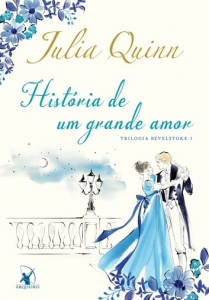
História de um grande amor
-
Greek
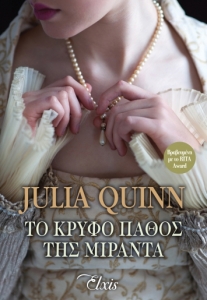
Το κρυφό πάθος της Μιράντα
-
Spanish
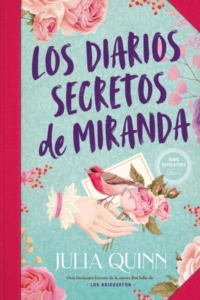
Los diarios secretos de Miranda
See More of JQ's Int'l Editions →
Awards & Achievements
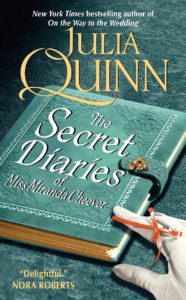
- A Main Selection of the Rhapsody Book Club and a featured alternate selection of the Doubleday Book Club.
-
 The Secret Diaries of Miss Miranda Cheever hit every major bestseller list: #2 in Publishers Weekly, #3 in the New York Times, #4 in the USA Today bestseller lists.
 -
 The Secret Diaries of Miss Miranda Cheever was named Best Regency Romance of the year in the 2007 RITA Awards. The RITAs are awarded by Romance Writers of America and are the highest honor in romance writing. JQ achieved a rare back-to-back win with this honor; she won the year before for On the Way to the Wedding.